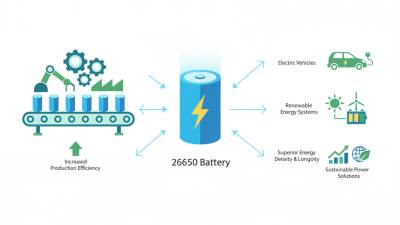
An 18650 Cylindrical Battery Pilot Line helps teams test cell designs before committing to larger-scale production. It brings key steps—electrode coating, calendaring, slitting, winding, filling, sealing, and formation—into a controlled workflow. Engineers can observe how changes in materials or settings affect cell consistency. The value is practical. A coating variation visible on a sample may become a repeatability problem across a larger batch.
Pilot production also creates useful process data. Teams can track electrode dimensions, winding quality, formation behavior, and test results under documented conditions. Those records help identify where a process needs adjustment and whether a promising result can be repeated. Small batches are not a guarantee of commercial performance, though. Equipment settings, material lots, and operator practices can all influence outcomes. That deserves attention.
For battery developers, manufacturers, and research groups, the line can serve as a bridge between laboratory experiments and production planning. It offers room to refine recipes, train operators, and assess equipment integration without pretending that scale-up is automatic. Clear procedures, calibrated instruments, and appropriate safety controls matter at every stage. Some questions will remain after the first trial. That is useful, too: a pilot line should reveal uncertainty early, while teams still have room to investigate and improve the process.

Why Choose an 18650 Cylindrical Battery Pilot Line?
How an 18650 Cylindrical Battery Pilot Line Works
An 18650 pilot line turns material recipes into testable cylindrical cells through a sequence of controlled operations. It starts with slurry preparation, where active materials, conductive additives, binder, and solvent are mixed. Operators coat the slurry onto metal foil, dry it, compress it, and slit it into electrode rolls. Small batches matter. They can reveal coating streaks, uneven thickness, or rough edges before a process is scaled up.
The electrode rolls are wound with separator material to form a compact assembly, then placed inside a steel can. The assembly is welded, dried, filled with electrolyte, and sealed. Each stage uses recorded settings and inspections; moisture and weld checks deserve particular attention. After assembly, cells undergo formation cycling, resting, and electrical grading. That sounds simple. It is not always. A pilot line helps teams compare process settings and track results across batches. Capacity, voltage, and resistance measurements can show whether adjustments to drying, pressure, or fill quantity are working. Some defects emerge only after aging, so early results can be misleading. Careful sampling and repeat runs make conclusions more dependable.

A pilot line connects electrode preparation, cell assembly, electrolyte filling, formation, and testing at a scale suited to process development. It helps teams evaluate process settings and cell performance before scaling production.
How to read the chart: During constant-current charging, cell voltage rises toward 4.2 V; constant-voltage charging then holds near that level as charging continues. This representative profile is illustrative only—actual limits and curves depend on cell chemistry and specifications.
Why Choose an 18650 Cylindrical Battery Pilot Line?
An 18650 pilot line helps teams test production steps before committing to larger-scale equipment. Its value lies in connecting process settings with measurable cell results. Electrode preparation starts with mixing active materials, binder, and conductive additives into a consistent slurry. The slurry is coated onto metal foil, dried, then calendered to control thickness and density. Operators inspect the coating for uneven edges, pinholes, or cracks. Small changes matter.
The prepared electrodes are slit to width, then wound with separator material into a cylindrical assembly. That assembly is inserted into a metal can, followed by electrolyte filling and sealing. During formation, controlled charge and discharge cycles help establish the cell’s electrochemical behavior. Temperature, voltage, and current records can reveal variation between batches. A pilot line will not remove every uncertainty; it can expose some before production scales. Even careful runs may need adjustment.
Tips: Keep samples from each stage and record settings beside test results. Check coating weight, winding alignment, and formation data together. One weak point: pilot results may not fully predict high-volume performance, so validate scale-up conditions carefully.
| Production Stage | Main Operations | Key Process Controls | Pilot-Line Value |
|---|---|---|---|
| 1. Material preparation and slurry mixing | Weigh active materials, conductive additives, and binder; mix the anode and cathode slurries; remove entrained air before coating. | Batch formulation, mixing sequence, viscosity, dispersion quality, and vacuum de-airing. Solvent and binder systems depend on the electrode chemistry. | Enables small, traceable batches so formulations can be adjusted without committing to large-scale production volumes. |
| 2. Electrode coating and drying | Apply slurry to copper foil for the anode and aluminum foil for the cathode; dry the coated webs in controlled oven zones. | Coating weight, width, edge profile, web tension, and residual moisture. Oven setpoints are recipe-dependent; roughly 80–140°C is a common engineering window for evaluation, not a universal recipe. | Allows coating uniformity and drying conditions to be tested on short runs before process parameters are scaled up. |
| 3. Calendering | Compress dried electrode sheets between precision rolls to achieve the specified thickness and electrode structure. | Roll gap, pressure, sheet thickness, density, and porosity. Target values depend on active material, loading, and cell design. | Supports rapid evaluation of the balance between coating density, porosity, adhesion, and electrochemical performance. |
| 4. Slitting and electrode inspection | Cut electrode rolls to the required widths, inspect edges, and remove defective sections before cell assembly. | Slit width, edge straightness, burrs, coating cracks, and cleanliness. Burr acceptance limits should be established for the specific equipment and cell design. | Helps identify edge defects and dimensional issues that can affect winding, insulation, or cell safety. |
| 5. Winding and cell insertion | Wind the anode, separator, and cathode into a cylindrical jelly roll; insert it into the 18650-format metal can. | Electrode alignment, separator overhang, winding tension, mandrel dimensions, and jelly-roll diameter. The 18650 designation refers nominally to an 18 mm diameter and 65 mm length format. | Makes it possible to tune winding and alignment settings while keeping trial quantities manageable. |
| 6. Tab connection and can sealing | Connect electrode tabs to the relevant terminals, place the assembly in the can, and complete the specified sealing operations. | Weld quality, electrical resistance, insulation placement, seal integrity, and dimensional consistency. Welding settings must be validated for the materials and joint geometry. | Enables joint and sealing trials before finalizing tooling and inspection criteria. |
| 7. Electrolyte filling and wetting | Dose electrolyte into the cell and allow time for it to wet the porous electrodes and separator before final closure. | Electrolyte mass, fill accuracy, vacuum or pressure profile, wetting time, and moisture exposure. Dry-room dew points of approximately −40°C or lower are commonly used in lithium-ion cell manufacturing, subject to process requirements. | Supports testing of fill quantities and wetting procedures while minimizing electrolyte use during development. |
| 8. Initial charging and formation | Charge and discharge newly assembled cells under a controlled protocol to establish the initial electrode–electrolyte interface. | Current profile, voltage limits, temperature, rest periods, and channel-to-channel data logging. Initial formation is often conducted at relatively low rates, with the exact protocol set by chemistry and design. | Provides early feedback on capacity, voltage behavior, cell consistency, and formation-protocol suitability. |
| 9. Aging, testing, and grading | Rest formed cells, measure electrical performance, check for abnormal self-discharge, and sort cells according to defined criteria. | Capacity, open-circuit voltage, direct-current resistance, temperature, and voltage change over time. Test limits should match the cell specification and application. | Turns pilot batches into comparable datasets for process improvement and engineering qualification. |
Note: Process windows are indicative engineering examples. Actual settings and acceptance criteria vary with cell chemistry, materials, equipment, and design requirements.
The 18650 format gives pilot teams a compact, familiar geometry for testing cell-making steps. Each cell is about 18 mm wide and 65 mm long, making it easier to design holders, fixtures, and basic handling procedures around consistent dimensions. That matters. A pilot line can use small batches to study electrode coating, winding tension, electrolyte filling, and formation without immediately committing to a larger cell format.
Cylindrical cells also make process comparisons practical. Teams can inspect can dimensions, weigh cells, and track capacity or temperature across samples. These measurements help reveal whether a change in coating thickness or winding pressure affects performance. The format is not a perfect shortcut: cylindrical winding has its own alignment and compression challenges, and results may not transfer directly to pouch or prismatic cells. Pilot data needs careful interpretation. Even good data can leave questions.
Tips: Keep batch records specific. Note electrode roll, winding settings, fill volume, and formation conditions. Photographing sample defects can help link visible changes to process records. Small details count. If measurements vary, check the test setup before blaming the cell design.
An 18650 pilot line gives engineers a controlled place to test whether a cell design can survive real manufacturing steps. The International Energy Agency reported that electric-car battery demand reached about 750 GWh in 2023, roughly 40% above 2022. That growth raises the stakes for repeatable processes, even when a development batch contains only a few hundred cells.
On a pilot line, teams can adjust slurry mixing, coating weight, calendering pressure, and electrode alignment, then track how each change affects cell performance. Small details matter. A slight coating variation or an uneven winding edge can show up later as inconsistent capacity or elevated temperature.
Logged process data, dimensional checks, and formation-cycle results help distinguish material problems from equipment settings. Engineers can also disassemble selected cells to inspect winding quality and electrode surfaces.
Useful, but not perfect. A pilot run may not reveal every issue that appears after longer production shifts or supplier changes. That gap deserves attention, not a confident guess.
Careful trials help refine the design, establish workable process windows, and identify which measurements need tighter control before scale-up.
Selecting an 18650 battery pilot line starts with the learning goal, not machine speed. An 18650 cell measures 18 mm by 65 mm, so small changes in coating thickness, electrode alignment, or winding tension can affect consistency. Ask suppliers to demonstrate process controls across mixing, coating, calendaring, slitting, winding, filling, and formation. Pretty equipment is not enough.
Capacity should match the experiment plan. The IEA’s Global EV Outlook 2024 reports that electric-vehicle battery demand exceeded 750 GWh in 2023, about 40% above 2022. That scale makes pilot data useful only when it can inform repeatable production. A pilot line should prioritize stable, traceable batches over impressive nameplate output. Check batch size, changeover time, yield measurement, and whether material records connect to cell-level results. Small details matter.
Safety and flexibility deserve equal scrutiny. Confirm that dry-room humidity control, dust management, fire detection, and formation-area monitoring suit the intended chemistry and site risks. Ask how recipes, alarms, and maintenance events are recorded. Request sample cells and review capacity variation, internal resistance, leakage checks, and cycle-test methods. Those tests take time. I would not choose from a brochure alone: pilot results can be noisy, and one good batch proves little.