Choosing a 26650 Battery Pilot Line can help a factory move from laboratory results to repeatable production. It creates a controlled space for testing electrode recipes, coating speeds, cell assembly, formation cycles, and safety checks. Engineers can adjust one variable at a time. That discipline matters.
Shirley Meng, a respected battery scientist and manufacturing researcher, has stressed, “We need to think about the whole life cycle of the battery.” Her point fits pilot-line planning closely. A 26650 Battery Pilot Line should not focus only on cell capacity. It should also examine material traceability, process stability, thermal behavior, equipment maintenance, and end-of-life handling.
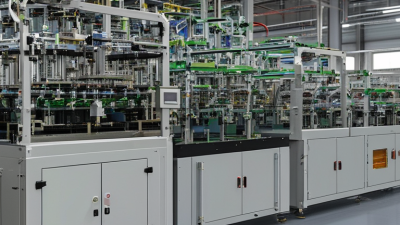
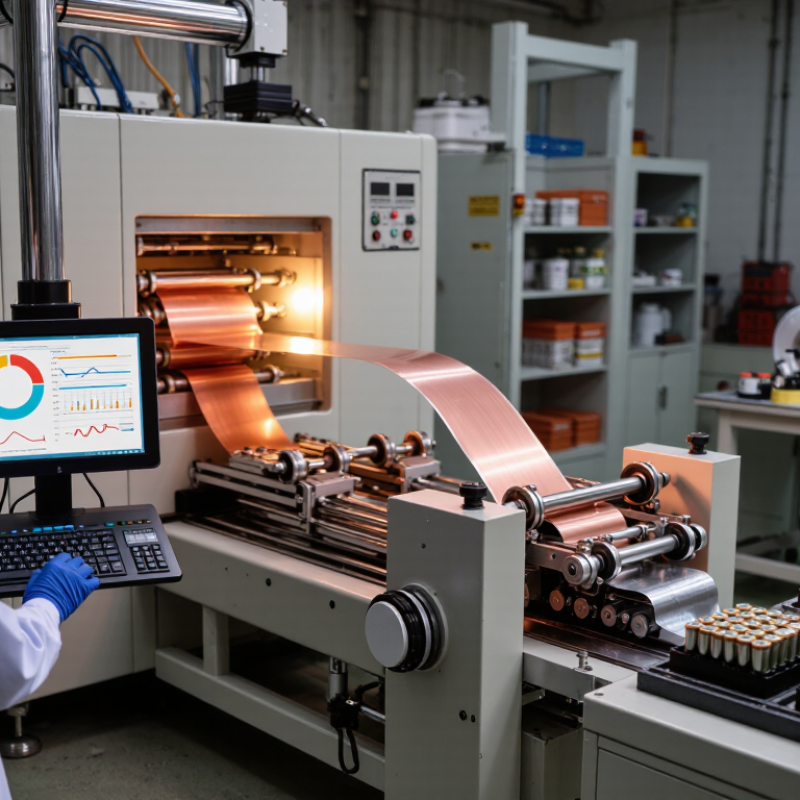
Picture the production floor. Slurry viscosity is measured before coating. Copper and aluminum foils pass through a calibrated drying oven. Operators inspect winding tension under bright, clean lighting. Formation data appears cell by cell, revealing weak patterns before mass production begins. These details provide practical evidence for investment decisions.
Pilot production also exposes uncomfortable truths. A promising laboratory design may become unstable at higher coating speeds. Yield may fall when humidity changes. A single manual step may slow the entire line. That is not failure. It is useful evidence.
However, a pilot line is not automatically the right choice for every factory. Its value depends on product goals, technical skills, available capital, and quality systems. A careful feasibility study should come first. With realistic targets and documented results, the line can reduce scale-up risk and strengthen long-term manufacturing confidence.
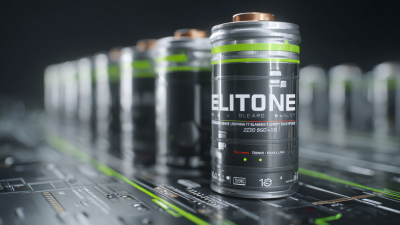
A 26650 cell is typically 26 millimeters wide and 65 millimeters long. The format describes its dimensions, not its chemistry or performance. Manufacturers may use different electrode designs and chemistries, so capacity, voltage, and cycle life must be verified for each cell design. In a pilot line, engineers can test coating uniformity, winding tension, electrolyte filling, and sealing before scaling production. These details matter. A small process variation can affect cell consistency and safety.
Grid storage gives this format a practical context. The International Energy Agency’s Batteries and Secure Energy Transitions report says battery storage additions more than doubled in 2023, reaching about 42 GW. That growth highlights demand for dependable cells, but it does not mean every format suits every system. 26650 cells can support modular packs, where individual cells are grouped for the required voltage and capacity. Still, pack space, thermal management, and cost may make another format a better fit. The assumption that one cell size solves every factory need deserves a closer look.
Tips: Use a pilot line to compare measured capacity, internal resistance, temperature rise, and cycle results across batches. Record defects, too; they often reveal process issues before scale-up. Use the IEA report as market context, not as proof that a specific 26650 design will succeed.

A 26650 battery pilot line helps a factory test equipment layouts and process controls before expanding production. Its larger cylindrical format makes consistent handling important. Small alignment errors can affect later assembly.
Core equipment typically includes electrode mixing tanks, coating and drying units, calendering and slitting machines, and winding or stacking stations. Assembly areas may use cell insertion, electrolyte filling, sealing, and formation equipment. Each stage needs suitable inspection tools, such as thickness gauges, vision checks, and electrical testers. Process data should be recorded by batch. It is not always tidy at pilot scale; manual adjustments can hide repeatability problems. That is worth examining.
Tips: Track material flow and changeover time during trials. Keep sample cells from each run for review. Verify safety controls and ventilation against the equipment supplier’s specifications. A pilot line is useful only when its results reflect realistic factory conditions. Don’t rush the data.
| Process Stage | Core Equipment | Key Process Controls | Pilot-Line Value |
|---|---|---|---|
| Cell design and material preparation | Material weighing station, powder mixer, vacuum planetary mixer | Active-material formulation, batch mass, mixing sequence, slurry viscosity, and moisture control | Enables controlled testing of electrode formulations before committing to larger-scale production. |
| Electrode coating and drying | Slot-die or doctor-blade coater, drying oven, solvent-handling and exhaust system | Coating width and loading, thickness uniformity, drying profile, and residual moisture | Supports repeatable electrode samples and adjustment of coating parameters. |
| Electrode calendering and slitting | Roll press, electrode slitter, edge-inspection equipment | Electrode density, thickness, width, edge quality, and particle or burr contamination | Produces electrode strips sized for the selected cylindrical-cell design. |
| Electrode notching and tab preparation | Notching press or laser notcher, tab-welding equipment | Notch geometry, tab position, weld strength, and metal-particle control | Allows evaluation of current-collector and tab designs before process scale-up. |
| Winding and assembly | Cylindrical-cell winding machine, insertion tooling, insulating-part applicator | Winding tension, alignment, electrode overhang, separator condition, and jelly-roll dimensions | Forms the electrode assembly for the selected 26650-format cell. |
| Can insertion and sealing preparation | Cylindrical can insertion station, grooving and crimping equipment, laser welder where required | Can fit, insulation placement, weld parameters, crimp dimensions, and seal integrity | Supports trials of assembly and sealing methods matched to the chosen cell construction. |
| Electrolyte filling and wetting | Vacuum electrolyte filling system, precision dispenser, controlled wetting area | Electrolyte mass, vacuum profile, fill consistency, and wetting time | Helps optimize filling conditions; electrolyte quantity and procedure depend on cell design and chemistry. |
| Formation and aging | Battery formation and grading channels, temperature-controlled aging racks | Charge/discharge recipe, voltage and current limits, temperature, rest periods, and cell monitoring | Provides early feedback on electrochemical performance and supports process development. |
| Inspection and performance testing | OCV and ACIR testers, capacity cyclers, dimensional and leak-test equipment | Voltage, internal resistance, capacity, dimensions, leakage, and traceable test records | Identifies process variation and screens cells against project-specific acceptance criteria. |
| Data and quality management | Process data collection system, barcode or lot-tracking tools, calibrated measurement instruments | Material-to-cell genealogy, equipment settings, calibration status, and nonconformance records | Improves experiment repeatability and makes pilot results easier to transfer to a production line. |
| Format note: “26650” commonly denotes a cylindrical cell format of approximately 26 mm in diameter and 65 mm in length. Actual finished dimensions, chemistry, capacity, equipment configuration, and process limits depend on the cell design and applicable specifications. Pilot-line equipment should be selected and validated for the intended materials, safety requirements, and target output. | |||
A 26650 battery pilot line needs more than floor space and assembly equipment. Plan for clear material routes, stable power, ventilation, and room for inspection stations. Measure doorways and service aisles before machines arrive; a few centimeters can complicate installation. Keep work areas dry, clean, and separated from unrelated production. Small details matter.
Before operation, define procedures for incoming-cell checks, electrode handling, assembly, formation, and final testing. Staff should know how to record batch data and respond to equipment alarms. Use calibrated instruments, documented maintenance schedules, and suitable protective equipment. Local fire and occupational-safety specialists can help assess the site’s specific risks. Do not treat generic layouts as a substitute for that review.
Pilot production is still production. Set limits for temperature, humidity, and process parameters based on the equipment and cell design, then log deviations rather than relying on memory. Provide safe storage for materials and finished cells, with access kept clear. Train operators on routine shutdowns and emergency procedures before the first trial. Test the workflow with a small run. It may feel slower than expected. That is useful feedback: crowded benches, unclear labels, or repeated manual transfers often reveal problems worth fixing before capacity grows.
Why Choose a 26650 Battery Pilot Line for Your Factory?
A 26650 battery pilot line gives factories a controlled space for quality improvement. It connects laboratory findings with repeatable production. Operators can inspect incoming materials, electrode coating, welding, sealing, and formation. Each stage should have recorded process limits and traceable batch data. Small deviations matter. A slightly uneven weld can increase resistance and create heat during cycling.
Safety measures must be built into the line, not added later. Equipment should monitor temperature, voltage, pressure, and abnormal current changes. Insulation checks and leak inspections can identify risks before testing begins. Fault simulations also help engineers evaluate protective responses. However, no test can predict every field condition. That limitation deserves honest discussion and regular review.
Performance testing should compare capacity, internal resistance, cycle life, and low-temperature behavior. Use calibrated instruments and consistent test conditions. Keep samples from different production runs. This reveals whether results are stable or only temporarily impressive. A pilot line also helps teams adjust formation profiles and inspection frequencies before larger production begins.
Tips: Record every failure, including minor ones. Review thermal images after extended cycling. Do not ignore inconsistent data. Recheck the instrument first, then the process. A useful pilot line should produce evidence, not just batteries.
A dedicated 26650 battery pilot line helps factories validate process capability before mass production. The chart shows practical operating targets for quality control, safety verification, and performance testing.
Higher percentages indicate stronger process consistency or test completion. Capacity grading and end-of-line testing are especially important for identifying abnormal cells before shipment, while full traceability supports root-cause analysis and production improvement.
A 26650 battery pilot line creates a controlled bridge between laboratory trials and commercial production. It lets engineers validate electrode coating, cell assembly, electrolyte filling, and formation under repeatable conditions. A practical pilot setup can reveal capacity variation before it becomes an expensive factory-wide issue. It also generates real process data, including coating thickness, moisture levels, welding strength, and formation curves. These measurements support better equipment selection and more reliable production planning.
The pilot line should mirror commercial workflows, but remain flexible. Operators can test new materials, adjust drying temperatures, and compare formation protocols without disrupting large-scale output. Traceability matters here. Each cell should connect to a batch record, inspection result, and process parameter. This evidence helps quality teams investigate defects quickly. The pilot will not predict every factory problem. It should expose uncomfortable gaps.
Tips: Keep pilot equipment configurable. Record every adjustment, including failed trials. Use statistical process control early, not after expansion. Review safety procedures whenever materials or operating limits change. A small line still needs disciplined housekeeping, calibrated instruments, and clear operator training. In practice, some pilot results may look promising but fail during longer production runs. That is not wasted work. It shows where scale-up assumptions need closer testing. Before commercial investment, confirm yield, cycle time, energy use, maintenance needs, and product consistency across repeated batches.