How to Understand the 32140 Tabless Battery Pilot Line?
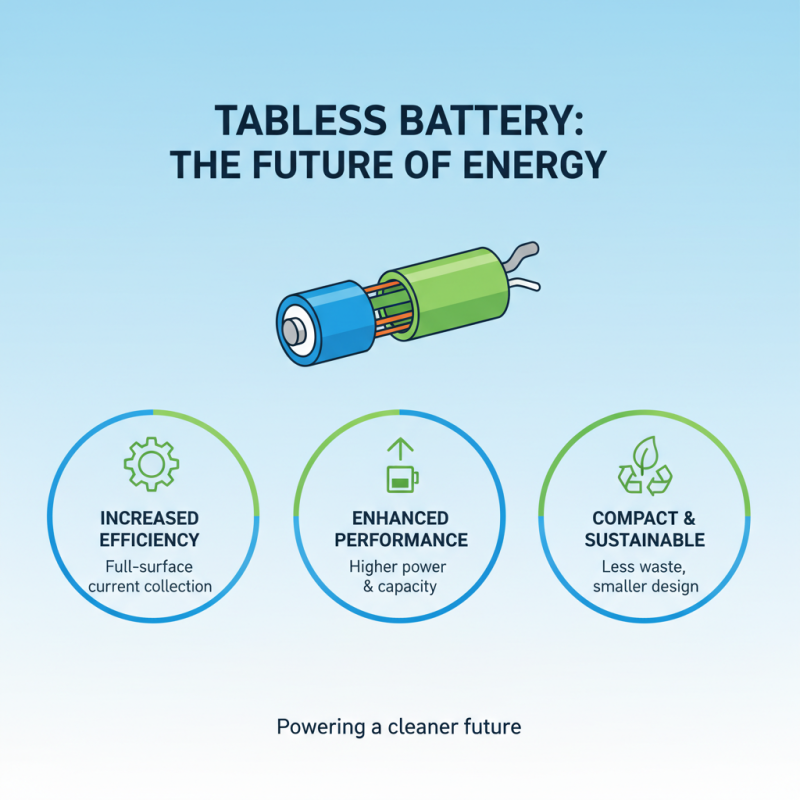
The 32140 Tabless Battery Pilot Line represents a groundbreaking approach to battery production. This innovative line eliminates the need for tabs in battery cells, streamlining the manufacturing process. As we delve into this topic, we will explore how this technology impacts efficiency and sustainability.
Understanding the 32140 Tabless Battery Pilot Line requires examining its design and functionality. This design minimizes materials, reducing waste in production. Companies adopting this technology might face challenges. For instance, transitioning from traditional methods involves significant adjustments.
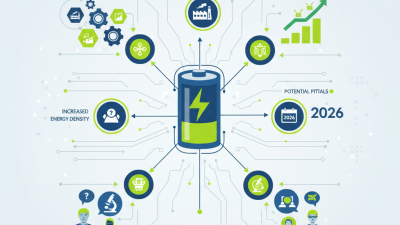
Moreover, the implications of this technology extend beyond manufacturing. The potential for better energy density could reshape how we think about battery performance. However, not all outcomes are positive; the reliability of tabless structures remains a topic for discussion. This exploration reveals both promise and uncertainty in the future of battery technology.
Overview of the 32140 Tabless Battery Technology
The 32140 tabless battery design is revolutionizing energy storage. This technology eliminates the traditional tabs that connect cells. By doing so, it simplifies the manufacturing process and reduces material waste. The design allows for more efficient energy flow within the battery. With fewer components, the potential for battery failure is significantly lowered.
One of the main advantages of the tabless battery is its improved thermal management. Heat can dissipate more effectively, which enhances safety. However, that doesn't mean there aren't challenges. The transition to this new technology requires rethinking existing processes. Engineers must also adapt to new manufacturing techniques that may not have proven efficiency yet.
Incorporating the tabless approach into production lines is not straightforward. There are complexities in scaling the technology. Quality control measures may need adjustments. Employees must be trained to understand these changes. Balancing innovation with real-world application is essential. Each step warrants careful consideration to ensure reliability and performance.
Key Components of the 32140 Tabless Battery Pilot Line
The 32140 Tabless Battery Pilot Line represents an innovative approach to battery manufacturing. This pilot line has several key components that enhance battery performance and manufacturing efficiency. The design eliminates tabs, which are traditionally used to connect electrodes, thereby reducing internal resistance and improving energy density.
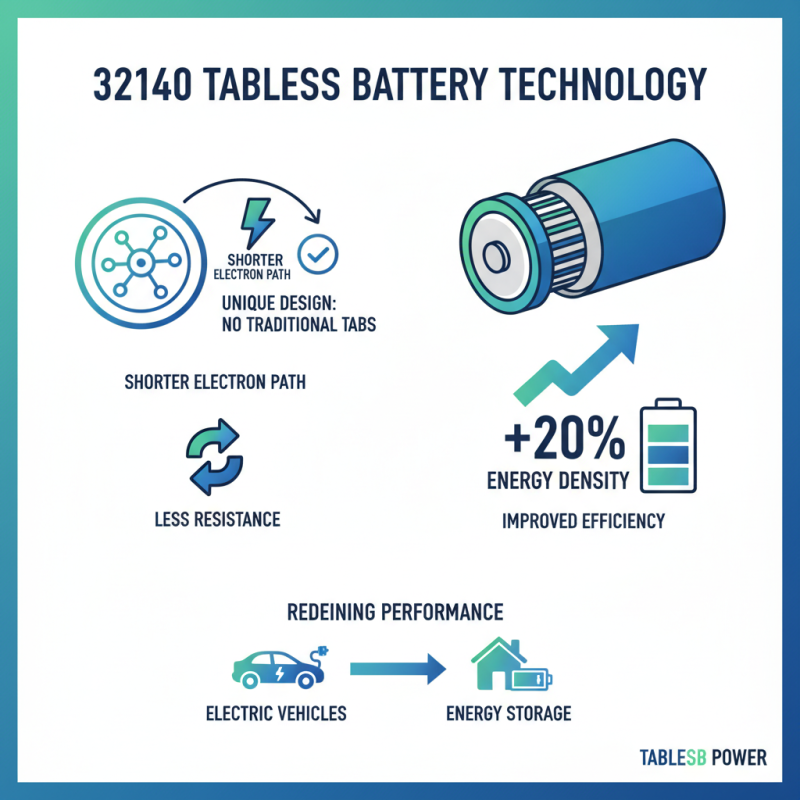
One significant aspect of the 32140 Tabless Battery is its cell design. The unique structure allows for a compact arrangement of materials. According to industry reports, this configuration can increase energy density by as much as 20%. This could be vital for electric vehicles and portable electronics. Moreover, the manufacturing process aims to reduce production costs by simplifying the assembly line.
However, there are challenges to consider. The transition to tabless technology requires precise engineering and quality control. Testing for durability and reliability becomes crucial. Data shows that early prototypes faced issues with battery lifespan. Engineers must continuously refine processes to address these shortcomings. The industry acknowledges that while innovations promise great potential, they also demand rigorous validation to realize their benefits fully.
How to Understand the 32140 Tabless Battery Pilot Line? - Key Components of the 32140 Tabless Battery Pilot Line
| Component |
Description |
Function |
Material |
| Cell Assembly |
Combination of active materials |
Energy storage |
Lithium Nickel Manganese Cobalt Oxide |
| Electrolyte |
Conductive medium for ions |
Facilitates ion transfer |
Lithium Salt in Organic Solvent |
| Separator |
Barrier between anode and cathode |
Prevents short-circuiting |
Polyethylene or Polypropylene |
| Current Collectors |
Conductive material for electron flow |
Collects and distributes current |
Copper (anode), Aluminum (cathode) |
| Battery Management System (BMS) |
Controls battery operation |
Safeguards and manages performance |
Various electronic components |
Production Process in the 32140 Tabless Battery Pilot Line
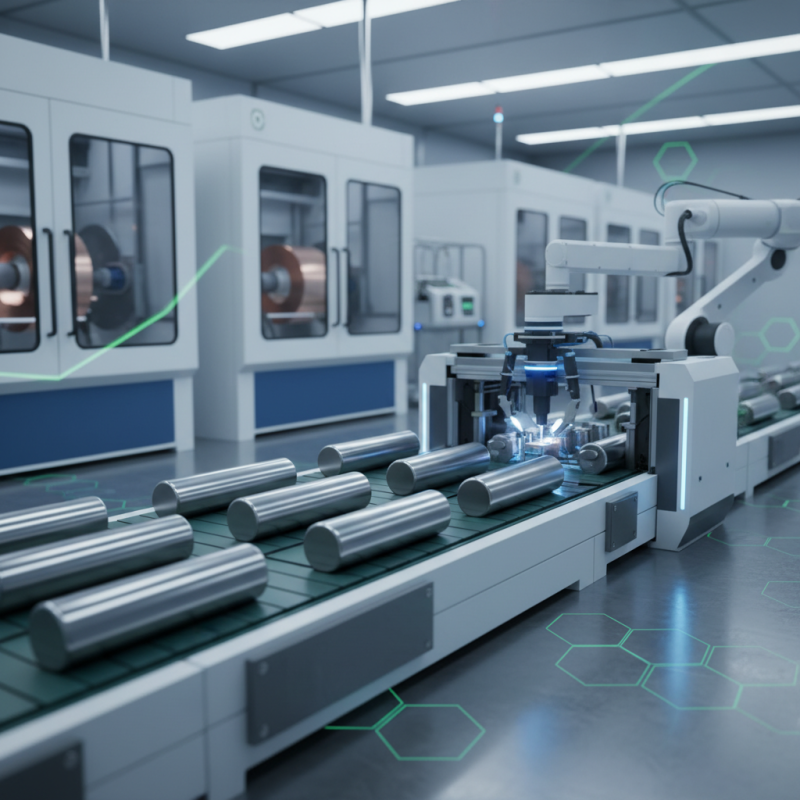
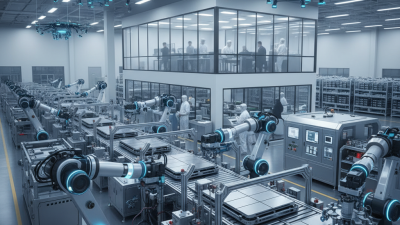
The production process in the 32140 Tabless Battery Pilot Line is a significant development in battery technology. This pilot line focuses on producing tabless cells, which promise increased efficiency and reduced manufacturing complexity. The use of this design can lead to a reduction in assembly costs by up to 30%, according to recent industry data.
Manufacturing tabless batteries involves unique steps. First, materials like lithium and nickel are precisely sourced. They are then processed to create a cohesive electrode structure. The absence of tabs simplifies connections, which not only enhances energy density but also accelerates production. Interestingly, while tabless designs advance efficiency, they present challenges, such as cooling during operation.
Quality control is crucial. Each cell must pass rigorous testing to ensure performance and safety. Reports indicate that nearly 15% of early pilot runs faced quality issues. Refining the process while addressing defects is essential for wider commercialization. The potential benefits of tabless cells could revolutionize the battery market, provided these challenges are managed effectively.
Advantages of Using Tabless Battery Technology
Tabless battery technology promises a significant shift in the energy storage landscape. This innovative design eliminates the need for traditional tabs, which are often a source of inefficiency in batteries. By removing these components, manufacturers can achieve a more compact and lightweight design. This could lead to batteries that deliver higher performance while also reducing waste.
One key advantage of tabless batteries is improved energy density. With a more efficient architecture, energy can be packed more tightly. This design allows for longer-lasting batteries, critical for electric vehicles and portable electronics. Another benefit is enhanced thermal management. Tabless structures can dissipate heat more effectively. However, the technology is still in its infancy and may face challenges in scalability.
Despite these promising features, challenges remain. The production process for tabless batteries can be complex and costly. For some manufacturers, adapting to this new technology might be a daunting task. There are also concerns about the long-term reliability of tabless designs. As this technology matures, it will be vital to address these issues to fully realize its potential.
Applications and Future Prospects of the 32140 Tabless Battery
The 32140 tabless battery technology is gaining traction for its unique design and efficiency. Current trends in battery production highlight a shift towards innovative designs. Tabless batteries eliminate traditional tabs, allowing for shorter electron pathways. This can reduce resistance and improve energy density by up to 20%. Such increases could redefine electric vehicle performance and energy storage systems.
Current reports indicate the growing potential of tabless batteries in renewable energy applications. For instance, the global market for energy storage systems is projected to reach $23 billion by 2025. With a focus on sustainability, tabless batteries could play a significant role. However, there are challenges. Production scalability remains uncertain. Research shows that optimizing manufacturing processes is crucial for widespread adoption.
Future prospects for the 32140 tabless battery include integration into consumer electronics and grid storage. The technology can offer rapid charging times and longer life cycles. Market analysts predict that tabless batteries could outperform traditional design by 2027. Yet, it’s essential to refine these technologies continuously. Overcoming efficiency gaps will be necessary for mainstream success.

 Cylindrical Cell Machine Line
  18650 Battery Pilot Line
  Pouch Cell Lab. Line
  Prismatic Cell Machine Line
  Spare Part



 Phone
Phone Send Email
 whatsapp
 Facebook
 Youtube