32140 Cylindrical Battery Pilot Line Best Practices and Innovations?
The 32140 Cylindrical Battery Pilot Line represents a significant advancement in battery manufacturing technology. As industries shift towards sustainable energy solutions, this pilot line showcases best practices for production efficiency. The design allows for higher output and improved quality control.
Innovations in this space are crucial. The integration of automation, for instance, enhances consistency but raises questions about workforce adaptation. Employees must adjust to these new tools. Challenges remain in optimizing the materials used, often leading to unexpected waste.
As we explore the advancements in the 32140 Cylindrical Battery Pilot Line, it's essential to reflect on the ongoing journey. Success means not just implementing new technologies, but also learning from setbacks. Continuous improvement will drive the industry forward.
Best Practices in Cylindrical Battery Production Processes
Cylindrical battery production involves numerous steps that demand precision and innovation. Effective material selection is crucial. Using high-quality electrodes ensures efficiency and performance in energy density. Properly sourcing materials can reduce environmental impact and enhance supply chain resilience. Each component should be carefully evaluated for consistency and reliability.
The assembly line design greatly influences productivity. Streamlined processes minimize waste and improve safety. Automation plays a key role in achieving consistent quality. However, over-reliance on machines may overlook human insights. Balancing automation with skilled labor is essential for problem-solving. Continuous training can enhance workers' expertise, but not every employee may adapt equally.
Testing at various stages is critical. Early detection of defects can save time and resources. Yet, complex testing procedures can slow down production. Finding the right balance between thoroughness and speed is challenging. Innovations such as real-time data analytics can provide valuable insights. These methods allow for quicker adjustments, yet they require careful implementation to avoid data overload. Overall, it is a continuous learning process, and sometimes, mistakes lead to the most significant improvements.
Innovations in Material Selection for Cylindrical Batteries
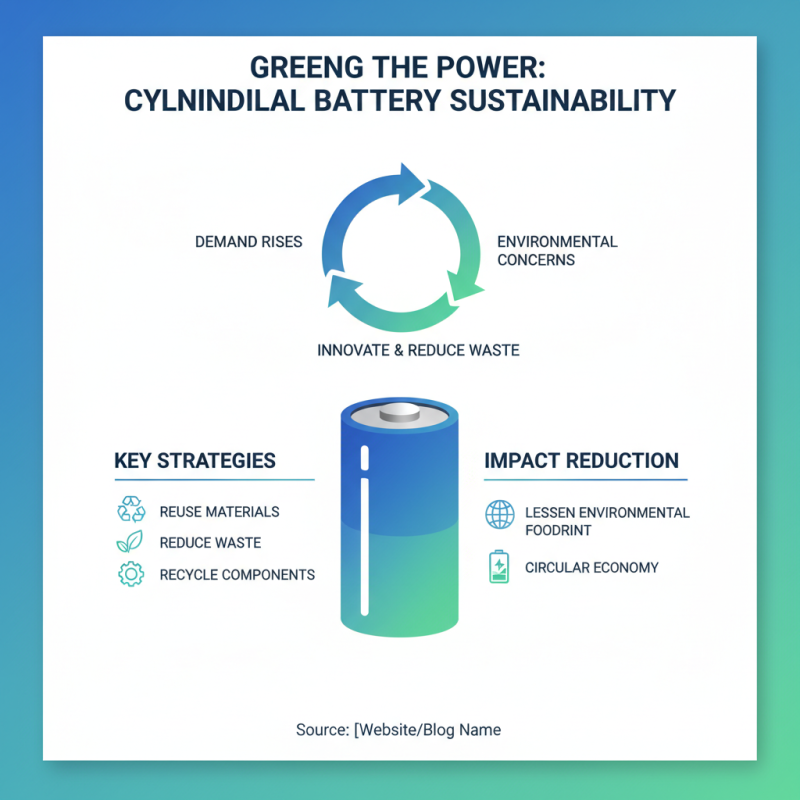
The innovation in material selection for cylindrical batteries has gained attention in recent years. Advanced materials enhance energy density and improve battery performance. New composites and formulations promise higher capacity and longer life cycles. Researchers are exploring alternatives that reduce dependence on scarce resources.
Some exciting advancements include the use of silicon anodes and polymer electrolytes. Silicon offers a much higher capacity than conventional materials. However, there are challenges with expansion during cycling. Polymer electrolytes can improve safety but may present conductivity issues. These innovations show potential, but also raise questions about scalability.
These materials might not be a one-size-fits-all solution. Different applications may require different approaches. Balancing cost, performance, and environmental impact is tricky. Ongoing research is essential to refine these materials. Experimentation may lead to unexpected results, and sometimes those results can be frustrating. As the industry learns from these trials, advancements will continue to reshape cylindrical battery production.
Innovations in Material Selection for Cylindrical Batteries
Quality Control Measures in Battery Manufacturing Lines
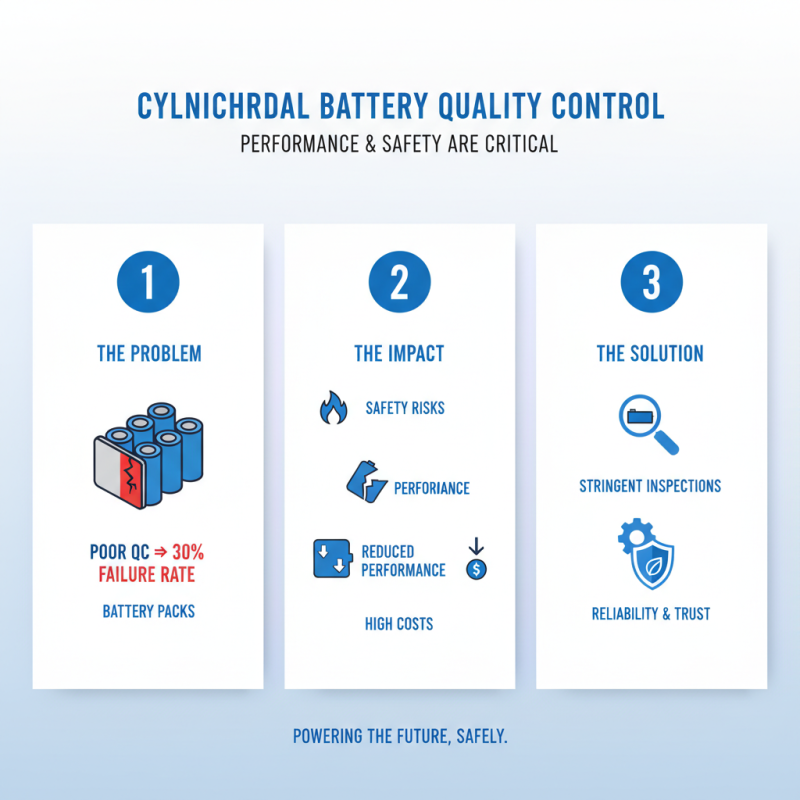
Quality control in battery manufacturing is critical. In the production of cylindrical batteries, adherence to stringent quality measures can significantly influence overall performance and safety. Industry reports indicate that poor quality control can lead to failure rates as high as 30% in battery packs. This statistic is alarming, given the increased demand for high-performance energy storage solutions.
One key practice involves rigorous testing of raw materials before they enter the production line. The use of automated inspection systems can identify defects early. This reduces waste and enhances efficiency. Additionally, integrating real-time data analytics can offer insights into production anomalies. Such innovations help manufacturers respond quickly to issues, improving reliability.
However, even with advanced systems, some oversights remain. Human error in manual inspections can still pose risks. The challenge lies in balancing automation with quality assurance on the floor. Regular training for staff on quality measures is essential. Failure to invest in this area can lead to chronic issues that undermine the entire production process. Addressing these concerns requires ongoing reflection and adaptation.
Automation Technologies for Enhancing Production Efficiency
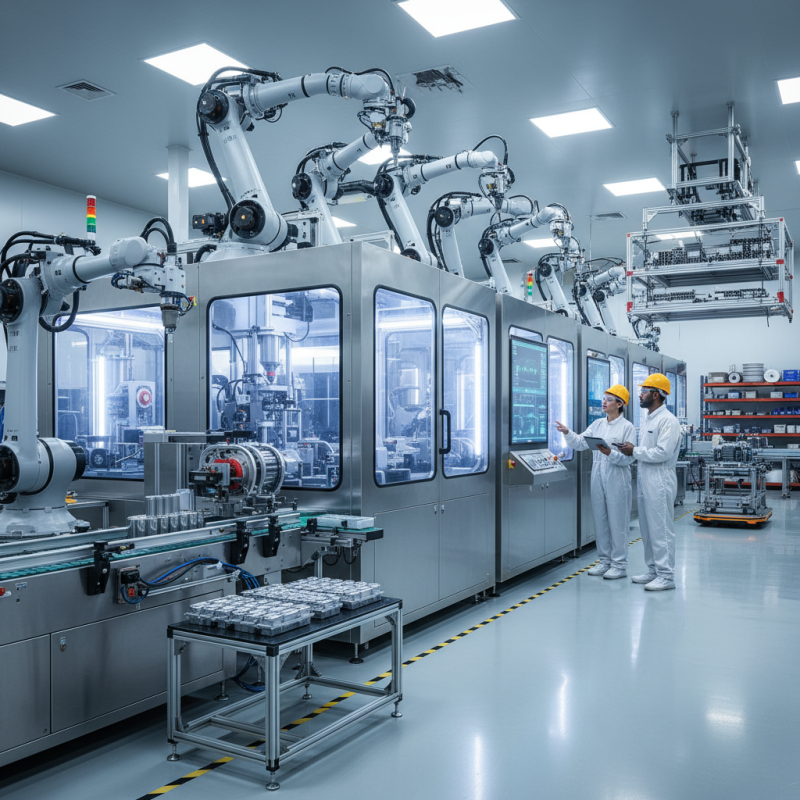
In the pursuit of enhancing production efficiency in cylindrical battery pilot lines, automation technology plays a vital role. Automated systems streamline various processes, reducing manual labor and potential human error. Utilizing robotics for tasks like assembly or quality control can significantly shorten production cycles. This allows teams to focus on complex tasks, creating a more balanced workflow.
However, integrating automation isn't without its challenges. Adapting to new technologies requires training and can initially slow down production. Moreover, issues like system malfunctions can create additional downtime. It's important to ensure that automation doesn’t lead to unforeseen bottlenecks. Continuous monitoring and adjustment are key, as the technology must evolve alongside the production demands.
Data analytics also enhances efficiency by providing insights into production metrics. Real-time data can help identify process inefficiencies quickly. However, companies must address data management challenges and ensure that their systems can effectively handle this information. Automation, when applied thoughtfully, can revolutionize production, but it necessitates ongoing reflection and adaptation.
32140 Cylindrical Battery Pilot Line Best Practices and Innovations
| Best Practice/Inovation |
Description |
Impact on Efficiency (%) |
Implementation Cost ($) |
| Automated Cell Formation |
Use of robots to form battery cells efficiently. |
30% |
250,000 |
| Data Analytics for Quality Control |
Implementing AI systems to analyze defects in real time. |
25% |
150,000 |
| Flexible Production Lines |
Adjusting machinery for different battery sizes quickly. |
20% |
300,000 |
| Eco-friendly Materials |
Using sustainable materials in battery production. |
15% |
100,000 |
| Real-time Monitoring Systems |
Installing sensors for continuous data collection and adjustments. |
18% |
200,000 |

 Cylindrical Cell Machine Line
  18650 Battery Pilot Line
  Pouch Cell Lab. Line
  Prismatic Cell Machine Line
  Spare Part







 Phone
Phone Send Email
 whatsapp
 Facebook
 Youtube