Choosing a 21700 Battery Pilot Line requires more than comparing equipment prices. The decision shapes cell quality, production learning, safety controls, and future scale-up. A pilot line should reproduce key industrial conditions, not merely demonstrate laboratory chemistry.
The International Energy Agency reported that global battery manufacturing capacity exceeded 2.5 TWh in 2023. China represented roughly three-quarters of that capacity. BloombergNEF reported an average lithium-ion pack price of $115 per kWh in 2024. These figures signal intense competition and falling costs. They also expose a problem: a cheap pilot line can create expensive learning delays.
Professor Shirley Meng, a leading battery scientist, has stated, “Battery innovation must connect science with manufacturing.” That principle should guide every equipment choice. The line needs accurate slurry mixing, controlled coating, precise calendaring, dry-room handling, formation, and reliable data collection. Small details matter. A wrinkled electrode roll can distort test results. Uneven moisture can shorten cycle life.
A practical 21700 Battery Pilot Line should match the target chemistry, electrode width, throughput, and quality standards. It should also allow engineers to change recipes without rebuilding the entire process. That sounds obvious. It is often missed.
Reports provide useful benchmarks, but they do not replace factory experience. Energy use, yield, maintenance access, and operator training may differ sharply between suppliers. This introduction may not capture every local constraint. That limitation deserves attention, because pilot-line decisions are rarely perfect on the first attempt.
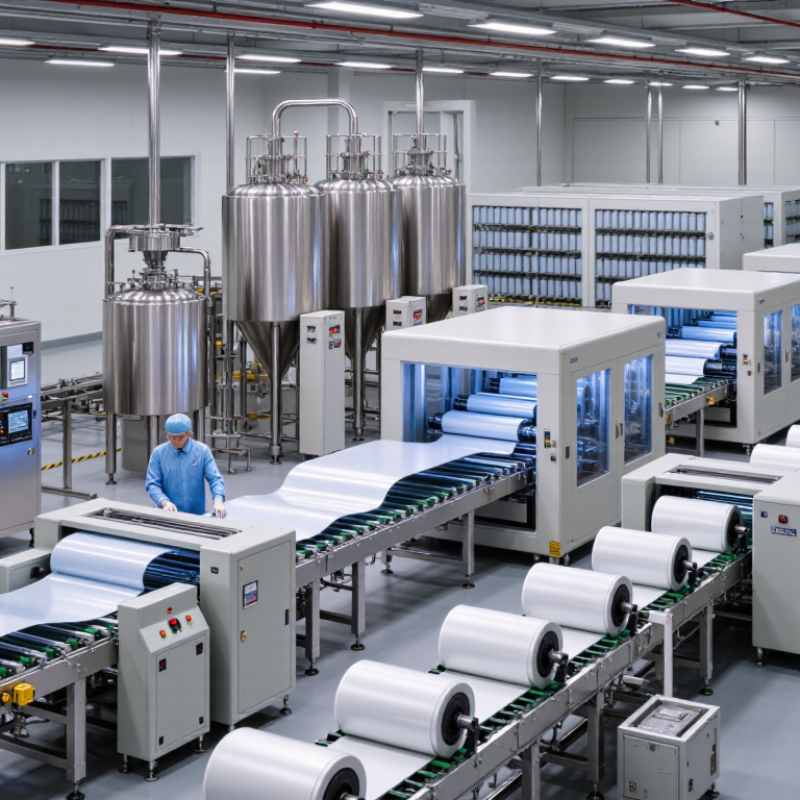
A 21700 battery pilot line should begin with a written purpose, not equipment shopping. Decide whether the line will validate cell design, improve process stability, or prepare samples for customer testing. Each goal changes the required machines, staffing, and budget. A realistic target may be 500 to 2,000 cells per day. That range supports learning without pretending to be mass production.
Set clear boundaries around the process. A typical scope may include electrode preparation, coating, drying, slitting, winding, welding, electrolyte filling, sealing, formation, aging, and testing. Define the cell chemistry, capacity range, tab design, and acceptable dimensional limits. Do not leave these details for the equipment supplier. That assumption often creates expensive changes later. It happens more than expected.
The line also needs measurable decision gates. Track coating thickness, moisture levels, weld resistance, formation curves, capacity, leakage, and temperature behavior. Use batch records and barcode-based traceability from electrode rolls to finished cells. A controlled dry room, ventilation, electrical protection, interlocks, and suitable fire-response systems are essential. Requirements vary by location, so verify applicable safety, environmental, and transport rules early. Keep pilot tools flexible, but not vague. Excessive flexibility can weaken repeatability. Before finalizing the layout, operators should walk the material route and mark every manual transfer, inspection point, and possible contamination source.
How to Choose a 21700 Battery Pilot Line?
A 21700 pilot line must reproduce production conditions, not merely assemble sample cells. The format uses a 21 mm diameter and 70 mm length, leaving little room for winding errors. Electrode mixing, coating, drying, calendering, slitting, and winding require controlled tension and stable thickness. The International Energy Agency reported global battery demand near 750 GWh in 2023. This growth makes process transfer increasingly important.
Evaluate the core equipment as one connected system. A vacuum mixer should provide repeatable slurry dispersion and temperature control. The coating unit needs accurate loading control across the electrode width. Dry-room capacity matters because moisture can damage electrolyte performance and increase safety risks. Formation equipment should support programmable current profiles, thermal monitoring, and traceable data collection. Inline vision inspection can identify burrs, wrinkles, and welding defects before expensive testing begins.
Do not overbuild too early. A smaller pilot line may reveal more useful process variation than a large, automated setup. However, cheap equipment can hide defects through unstable calibration. Industry studies from the U.S. Department of Energy emphasize yield improvement, digital process control, and scale-up validation in battery manufacturing. A practical evaluation should compare material utilization, cycle time, energy consumption, and first-pass yield. These figures are often estimated, not proven. That is the uncomfortable part. Pilot results can look excellent until larger batches expose drying gradients, inconsistent compression, or aging failures.
Choosing a 21700 battery pilot line requires more than checking production speed. Safety, quality control, and testing capability reveal whether the line can produce reliable cells repeatedly.
A strong line begins with controlled material handling. Electrode coating should monitor thickness, moisture, and loading consistency. Dry-room humidity needs continuous records, not occasional checks. During winding, cameras should detect misalignment, exposed foil, and damaged separators. I have seen small wrinkles become serious failure risks later. They should not.
Quality control must continue after assembly. Each cell needs traceable records for materials, equipment settings, operators, and inspection results. Formation data should include voltage curves, temperature, capacity, and internal resistance. Statistical process control can expose gradual drift before defective cells multiply. Calibration matters too. A perfect test plan fails when sensors are inaccurate.
Testing capability separates a demonstration line from a dependable pilot line. Ask whether the facility can perform electrical, thermal, mechanical, and abuse testing under applicable standards. Useful checks include overcharge protection, external short response, crush behavior, vibration resistance, leakage, and elevated-temperature storage. The lab should control sample preparation and retain failed cells for analysis. Capacity testing alone is insufficient. A line may pass today and still lack repeatability. Pilot production should include aging studies, destructive analysis, and clear quarantine procedures. Some choices remain uncertain until larger batches expose hidden variation.
Compare safety coverage, quality control, and testing capabilities before scaling production.
A 21700 pilot line should match your actual development workload, not an impressive brochure number. Check daily output under realistic conditions, including changeovers, inspections, and scheduled maintenance. A line producing 1,000 cells per day may be more useful than a larger system with poor process control. Review electrode coating width, winding speed, formation channels, and usable floor space. Ask for batch records and sample yield data. Experience matters here.
Tips: Measure capacity by qualified cells, not assembled units. Test one complete production cycle before signing. Confirm whether operators can adjust winding tension, tab welding, electrolyte filling, and formation profiles without complicated delays. Flexible tooling supports different electrode thicknesses and cell chemistries. It also reduces the cost of early experiments. Keep spare sensors and critical fixtures available. Small delays become expensive quickly.
Automation should improve repeatability and traceability, not simply add screens and robots. Look for barcode tracking, automatic alarms, data export, and clear fault recovery steps. A pilot line should support manual intervention when engineers investigate defects. However, excessive manual work can create inconsistent results. I would not assume expansion is easy. Check utility loads, software architecture, equipment spacing, and future module connections. Leave room for extra formation channels and inspection stations. A careful site review often reveals limitations that quotations miss. Some decisions will still need revision after the first trial.
A 21700 pilot line should be judged by investment value, not equipment price alone. The International Energy Agency reported around 750 GWh of lithium-ion battery demand in 2023. That growth increases pressure to validate processes quickly and reliably. BloombergNEF reported an average lithium-ion battery pack price of $115 per kWh in 2024. This figure is not a pilot-line quotation. It does show why yield, energy density, and production learning matter.
Build a total-cost model before requesting supplier offers. Include formation equipment, dry-room utilities, installation, operators, consumables, electrode scrap, testing, maintenance, and software updates. Add the cost of idle equipment. It is often ignored. A practical model should compare cost per qualified cell, not cost per machine. Record coating uniformity, winding tension, electrolyte filling accuracy, formation time, and first-pass yield. For a small line, every rejected batch becomes visible.
Supplier support can change the payback period. Require installation supervision, process recipes, spare-part lead times, training hours, and remote diagnostics in writing. Ask for sample data from similar 21700 cells. Generic promises are weak evidence. The supplier should also explain how the line scales toward automation and higher throughput. My first spreadsheet would probably be wrong. Labor learning curves and unexpected rework are difficult to predict. A staged investment may therefore protect capital, while leaving room for better materials, testing methods, and future cell designs.